In a World of Cheap Music, What’s Valuable?

The abundance problem is about to get worse. How to stand out in a sea of sameness.
Our brains process sound ten times faster than visual stimuli.
Good, fast, cheap: pick two. That rule ran production for a century. AI music is breaking it with outputs that are fast, cheap, and don’t-want-to-admit-it-but-pretty-good. Plasticky, legally precarious, derivative of everything that came before? Sure. But often impressive, contagious, and smart. It’s not going away. As AI music gets even better, we need to honestly ask ourselves, our clients and our audiences, what makes an impact?
Continuity is what turns music spend into brand equity. Whether you’re working with a $600 stock track, bespoke original composition or licensing the Rolling Stones, the question is the same: does the audience takeaway add up to something over time. Something your audience latches onto, recalls, and comes back to? Or does it reset with every brief, every campaign, every agency engagement?
How to Stand Out When Everyone Sounds the Same.
AI tools can generate a passable, if legally dangerous, track in under a minute. Subscription libraries offer millions of options at a flat monthly rate. It has never been faster or cheaper to source music of any style for any media.
This is genuinely good news for production. It is genuinely bad news for brand differentiation.
In Pixar’s 2004 The Incredibles, young Dash argues “If everyone is special, doesn’t that mean that no one is special.”
When everyone has access to the same abundance, the abundance stops being an advantage. The track that sounds “inspiring” is available to every brand that wants to sound inspiring. The one that feels “premium” is a click away for your direct competitor. You’re not crafting a brand sound, you’re renting a reference, a style, a mood. You don’t own the mood, and in 2026, relevant moods change quickly.
A genre isn’t an identity. Every brand that saturates the market with the same aesthetic and emotional register will either be confused with a competitor or read as less-than-premium copycat. Olivia Korchagin wrote about this phenomenon in the NYC Hospitality space’s blanket reliance on retro funk, appropriate, but undifferentiated.
Let’s look at it from the visual point of view. Imagine sharing a typeface and color palette with your closest competitor. Imagine your logo being mistaken for a similar brand. Imagine your tagline overlapping with a better-known one. Sound works the same way. While many brands aren’t listening for it, audiences are.
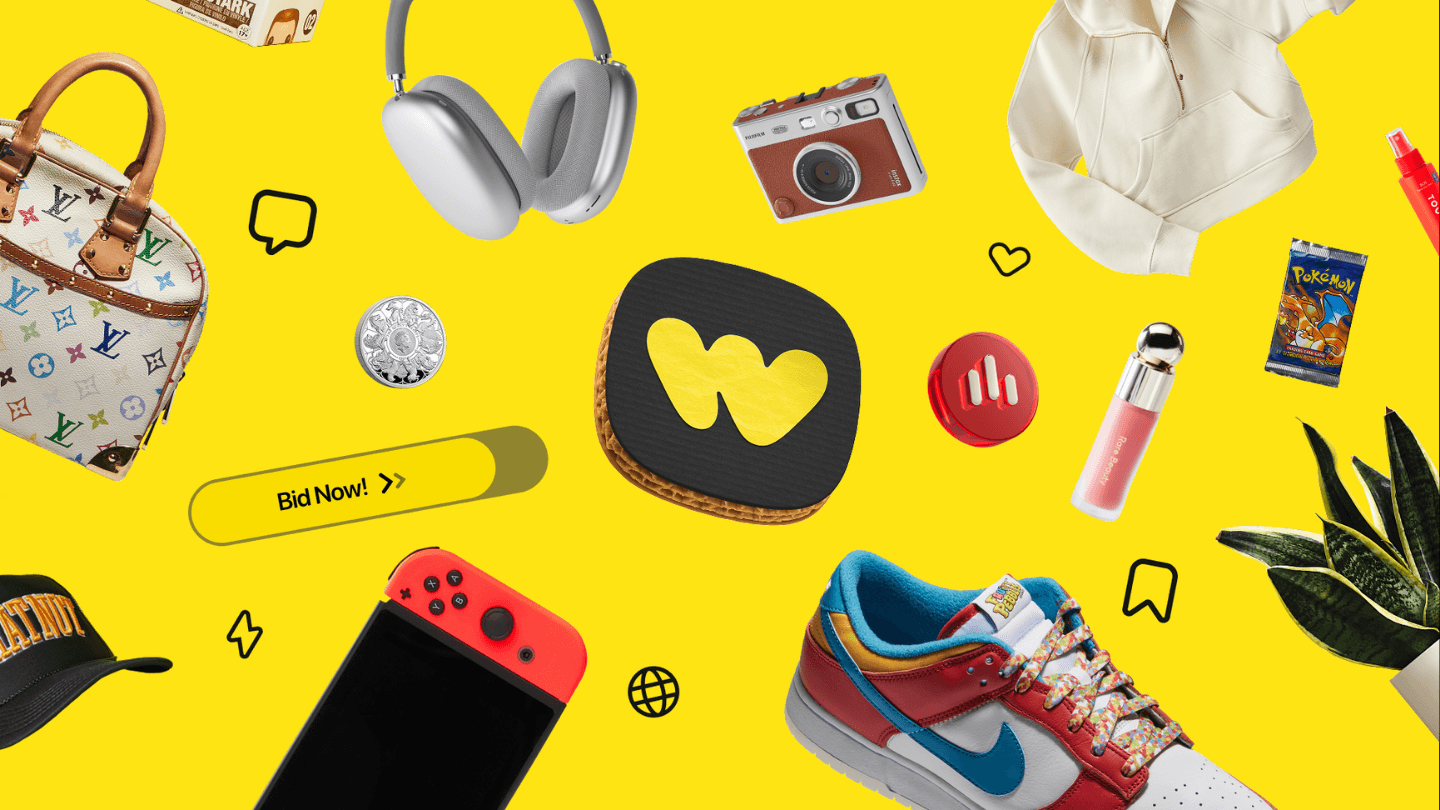
The abundance problem is about to get worse.
In March 2023, a journalist sent me a headline: “AI startup Boomy.ai has composed 10 million songs in the past week.” While technically impressive, I chuckled. My clients’ biggest problem has never been too few generic tracks to choose from. They already have have millions. Adding 10 million more doesn’t solve anything. It actually makes the question harder: which one is actually right for your brand?
Here’s a secret from someone who’s spent twenty years finding music for brands: there is no perfect track. There’s almost always more than one that could work. (And yes, when a piece of licensed music is clearly the right call, make the case and go out and get it.) The real problem isn’t production volume. It’s brand coherence. And no tool, library, or AI workflow can manufacture that for you.
I want to be direct about where I stand on AI music: I’m genuinely excited about it. Tools like Suno, Udio, Eleven Labs and ACE Studio are real, and they’re going to get more capable and for better or worse the legal precarities will be ironed out over time . Many colleagues fear them, ignore them, or underestimate them. My view is simpler: the minute our clients can safely and responsibly use these tools, we can too. A hammer is only as good as the person swinging it. And with decades of experience in music and sound for brand and advertising the willing and curious are able to wield these tools elegantly, creativity and effectively.
What actually builds sonic equity.
Think about the brands you can hear before you can picture them. McDonald’s. Netflix. United Airlines. Jack Daniel’s. In our BASYS™ methodology we call these God-mode sonic brands, the sound alone does the work of the logo.
What they share isn’t one exceptional piece of audio. It’s coherence over time. The same brand point of view, from campaign to campaign, touchpoint to touchpoint, across broadcast, social, in-store, product. Audiences don’t form associations from a single exposure. They form them through repetition across experience and time, for something to stick.
When your sound changes every quarter, your audience never gets the chance to make that association. A different track, different vibe, different emotional register. You’re spending on music and building nothing.
Ipsos analyzed more than 2,000 ads and found distinctive sonic assets drive 8.5x more branded attention than visual logos. But only when the sound is consistent enough to become distinctive in the first place.
One good track is a moment. Twelve coherent licenses, one brand song or a consistent approach to catalog music over two years is a music brand. What is “I’m Lovin’ It” worth to McDonald’s? Rhapsody in Blue to United? The Tudum to Netflix? That’s not music spend. That’s enterprise IP worth hundreds of millions.
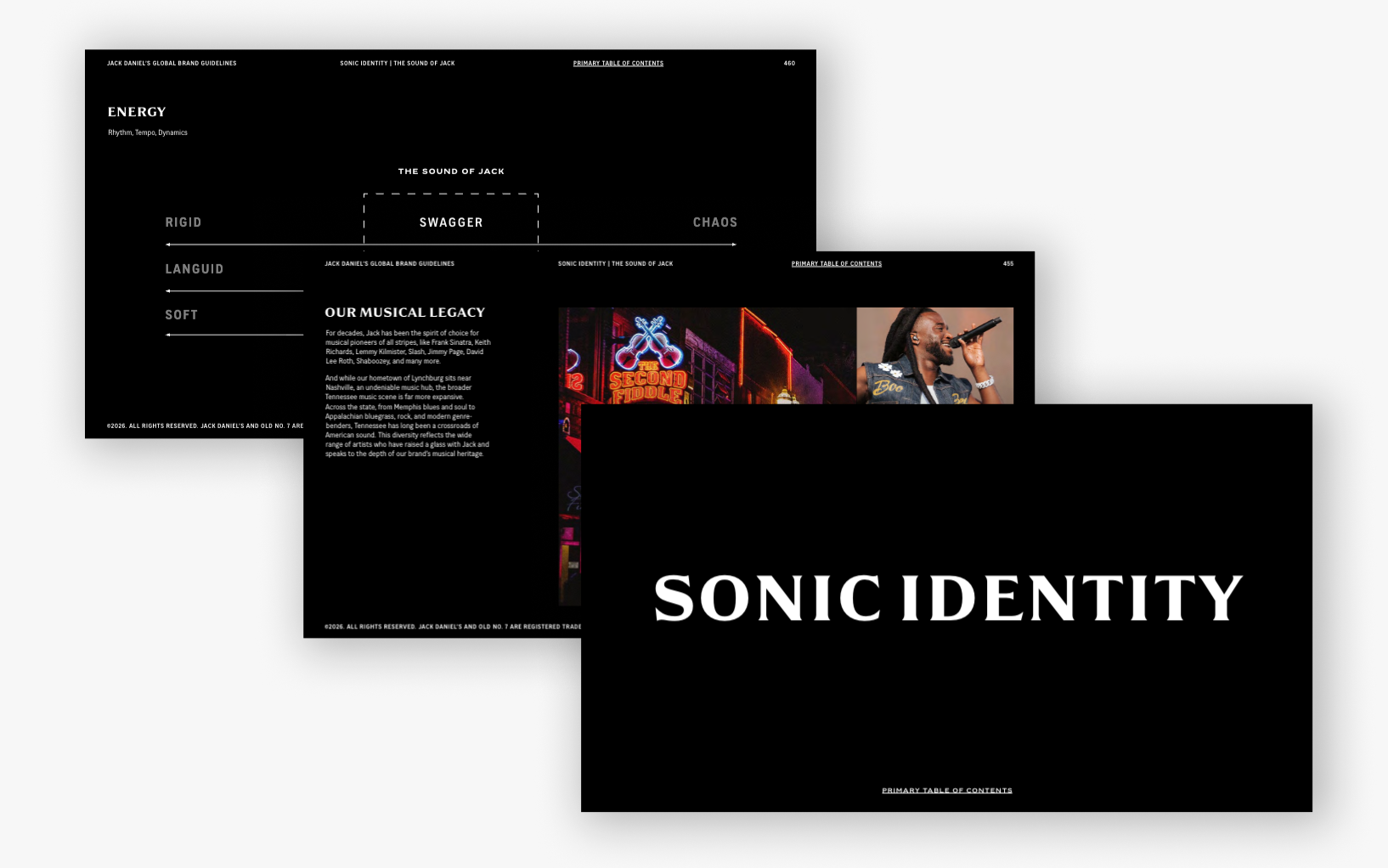
The continuity problem isn’t new. AI is accelerating it.
In 1819, Schopenhauer argued that music is unlike all other arts. It’s not a representation of ideas, but a direct expression of will itself. In 2026 we read “Will” as emotional experience. Brands have understood this intuitively for decades without being able to govern it clearly enough to act on it.
The problem isn’t that internal and external teams make poor musical choices. It’s that without an orienting framework, such as a sonic brand, music principles and governance, a unique perspective and aesthetic, every music decision gets made by committee, by gut, by whoever happens to be in the room before a spot needs to ship. This results in incoherence. You don’t sound like a different brand quarter to quarter because anyone made a bad call. You sound like a different brand because no one made a consistent one.
Our work with Jack Daniel’s was built around exactly this: orienting global teams and their agency partners around a shared sonic point of view. What is The Sound of Jack, how to sound like no other, and how to ensure that diverse teams across different markets and products will consistently activate sound in the field. It’s not a music production project. It’s governance. And governance is what stock music chosen by 12 different vendors will never offer a brand.
What cheap music actually costs.
I’ve watched the same budget math play out more times than I can count. A team starts with an original music budget. It gets triple-bid. Three vendors offered 5–10% of the total to produce demos, then value-engineered down through rounds of stakeholder review. The work sounds like the budget behind it. Then, at the last minute, someone suggests a Willie Nelson or Kaytranada master, and the budget expands by 10–15x. Where’s the ROI in this equation?
It rarely works out. But the instinct that leads to it, the desire for music that already means something is actually correct. The value of well-known licensed music is real. Audiences carry a pre-existing emotional relationship with it; familiarity creates connection faster than an original track can.
The problem with building your brand audio around licensed music isn’t that it doesn’t work. It’s that when it works, typically the equity accumulates in the artist, not in you. The audience associates the feeling with the song, not with your brand. You’re paying for borrowed meaning. And borrowed meaning isn’t yours to keep.
Reframing value in music usage. Music budgets are fungible. Music strategy is not.
In a world of cheap music, what’s valuable is continuity. A recognizable, coherent sonic identity that compounds over time. Perspective. Taste. A consistent set of principles that governs how your brand sounds. In every room, on every platform, at every moment where the humans are listening.
Wilson Brown is the founder and Executive Creative Director of the global sonic studio, Antfood, with offices in New York, São Paulo, Los Angeles, and Amsterdam.
If you read this and thought 'we have a coherence problem' you're not alone. Sign up for a free Sonic Health Check today.

Similar content
Sound Strategy: How to Talk Music For Non-Musicians
by Marina Kagan

Wellness by Sound Design
by Cecilia Conde

Hackable Audio: Crafting Sonic Puzzles for Google
by Charlie Blasberg